


Back in Los Angeles, I was reporting and writing profiles and features at a pretty rapid pace, about every other week. Now, we’re doing less of that in favor of more restaurant industry analysis, quick-hit newsy bits, voicey essays, and reported recs. But profiles and features remain a fundamental part of The Angel’s DNA, and every other month (sometimes more), we’ll publish a carefully considered long read. That’s what today’s letter is: a feature on how the “shortage” of Chartreuse has prompted indie New York distillers to try their hand at conjuring their own versions of the elusive alpine spirit.
If there’s a bigger story you think I should look into, or you have a juicy tip about New York (or Los Angeles) restaurants, email me at emily@theangel.nyc.
Photographs by David Gurzhiev
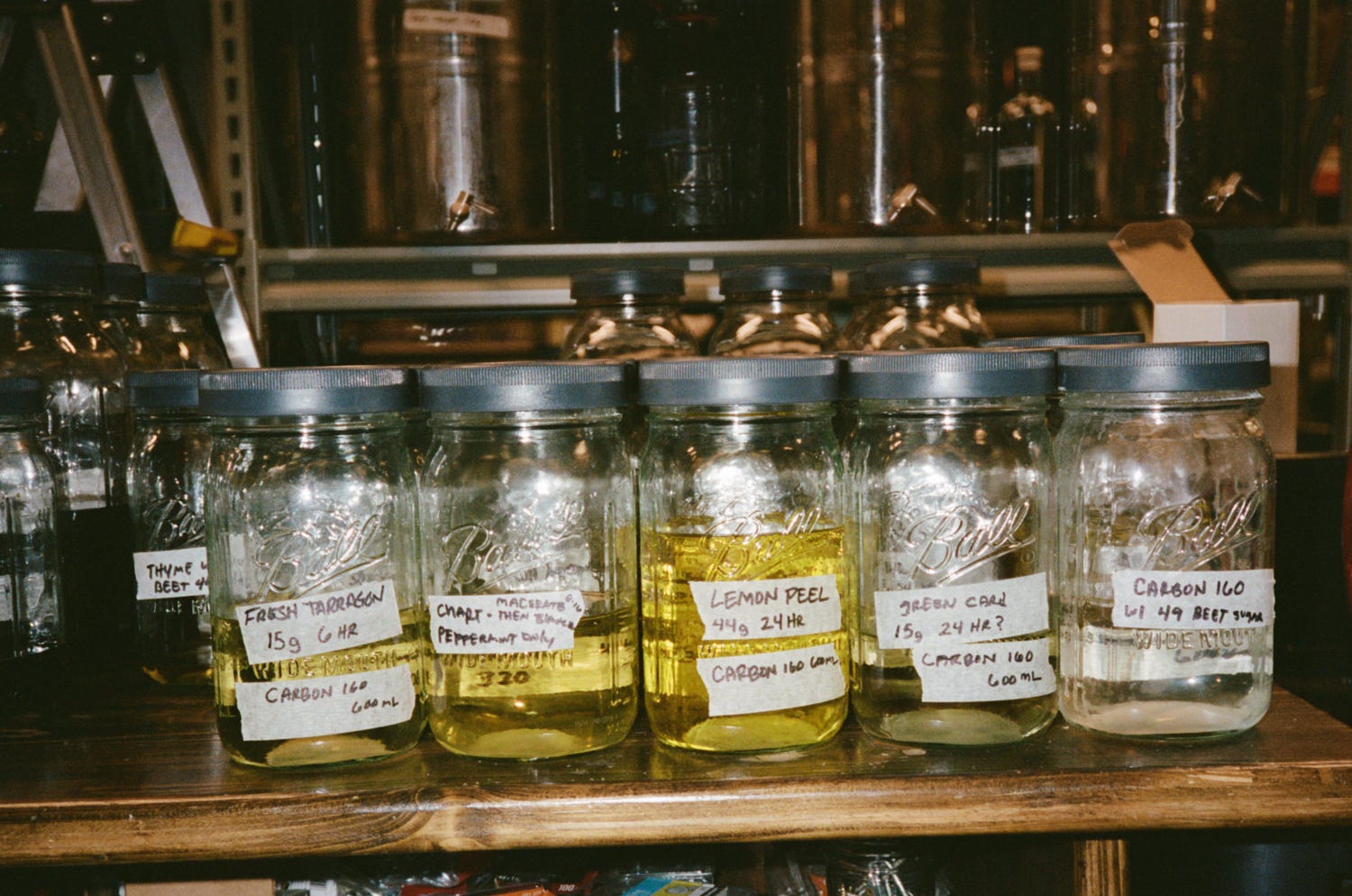
Chartreuse, a potent, glowy-green liqueur long made by Carthusian monks in the French Alps, is cultishly loved by seasoned bartenders and serious imbibers alike. Even so, it wouldn’t be strange if you’d never heard of the herbaceous, sweet elixir—most often sipped as a digestif or deployed in cocktails like the Last Word. If you have tried it and liked it enough to seek it out, though, you’ll have discovered that it’s remarkably hard to come by.
That’s because after demand spiked during the pandemic, when many people styled themselves hobbyist home bartenders, the monks who produce Chartreuse chose not to increase output. The mythologized liqueur, made from a secret recipe of 130 herbs and plants, is now tightly allocated and, often, quite expensive. Out of that scarcity has come an audacious Brooklyn answer: Chartreuse-style liqueurs made by artisan producers.
You’re still very likely to find real-deal Chartreuse at any reputable New York cocktail bar or high-end restaurant, but if you’re looking to buy a bottle—say, at Astor Wine & Spirits—you might be out of luck. “It comes in a few bottles at a time and sells very fast,” said a sales rep when I called to see if they had any in stock. “We do have some antique variations, but they’re very expensive.”
Chartreuse has been allocated since 2023, when the monks decided not to meet demand in order to prioritize their faith. The number of bottles a venue receives depends on available stock: bars are allotted more than retail, but each business type receives an equal amount relative to its competitors.
Chartreuse’s core customer has always been bartenders and sommeliers, who can spread the green gospel far and wide. “If the Carthusian monks are focused on prayer and meditation, they also believe in community, so it was a strategic decision to make sure, first and foremost, that Chartreuse goes to the people who supported and built the brand,” says Tim Master, VP of Marketing, Spirits at Frederick Wildman, the sole U.S. importer of Chartreuse. Still, in 2025, 50% of Chartreuse’s New York inventory went to retail. “Our goal is to get Chartreuse to as many customers as possible,” he says.
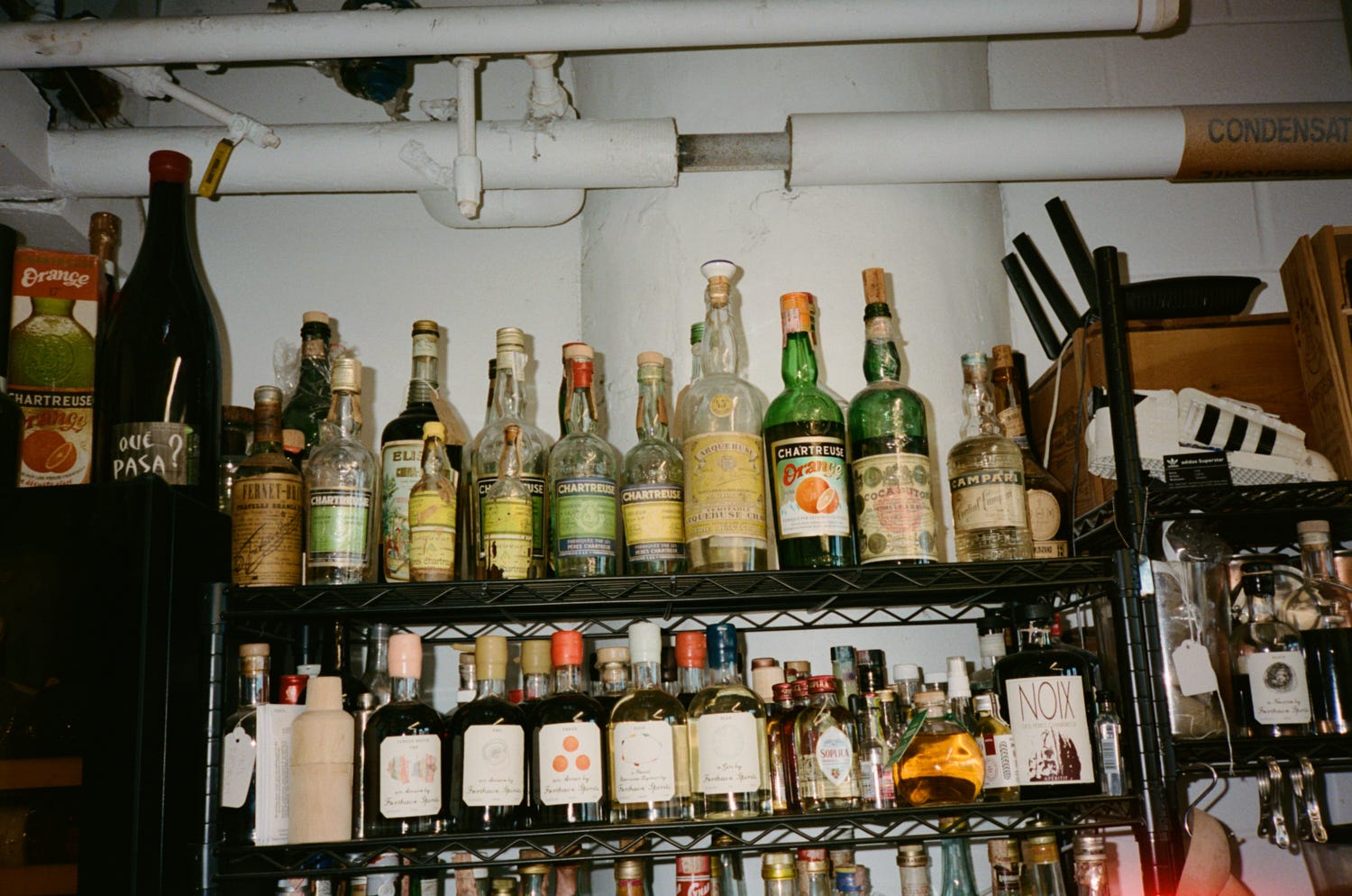
The sales rep at Astor also mentioned, without my asking, that they carry a variety of worthwhile-in-their-own-right substitutes, some made by small distillers in response to the shortage of the real thing (and others produced by big names, like Luxardo). These artisans are taking advantage of the demand for Chartreuse, both as an intellectual exercise and as a way to respond to a real opportunity in the market.
“With all this education and all this internet, there’s big business, and there’s money to be made,” says Sarah Morrissey, a veteran New York bartender and manager (Le Veau d’Or, Ernesto’s, Dutch Kills). “But then you have the artisanal people, who are finding a love of Chartreuse and saying, ‘I can’t get this, and I have a great flavor palate, and I got $30,000, let’s see what I can do.’”
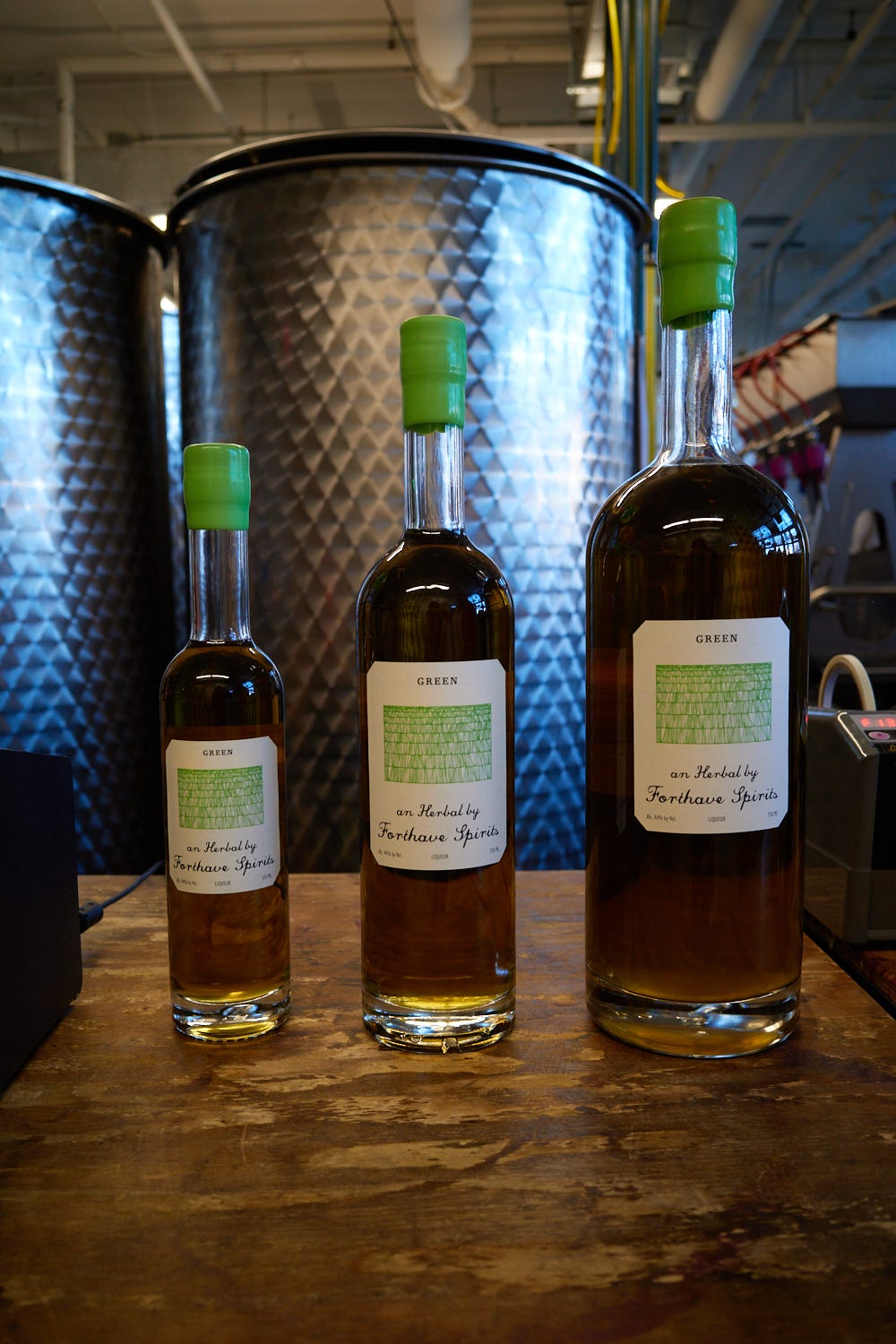
First up is Forthave Green, which comes from Forthave Spirits, the all-natural botanical distillery founded in 2012 and beloved by those in the culinary know. Released in limited quantities last fall, it grew out of an effort to put a Blue Hill at Stone Barns-grown crop of sorghum cane to use. The ensuing drink evolved through successive distillations with green herbs: organic fennel bulbs and fronds, tarragon, lemon balm, verbena, wild mints, angelica seed, hyssop, and more. The result is earthier than Chartreuse, naturally brown-green in color, and—though it’s the booziest thing they’ve ever made—comes in at 44 percent ABV versus Chartreuse’s 55, with roughly half the sugar.
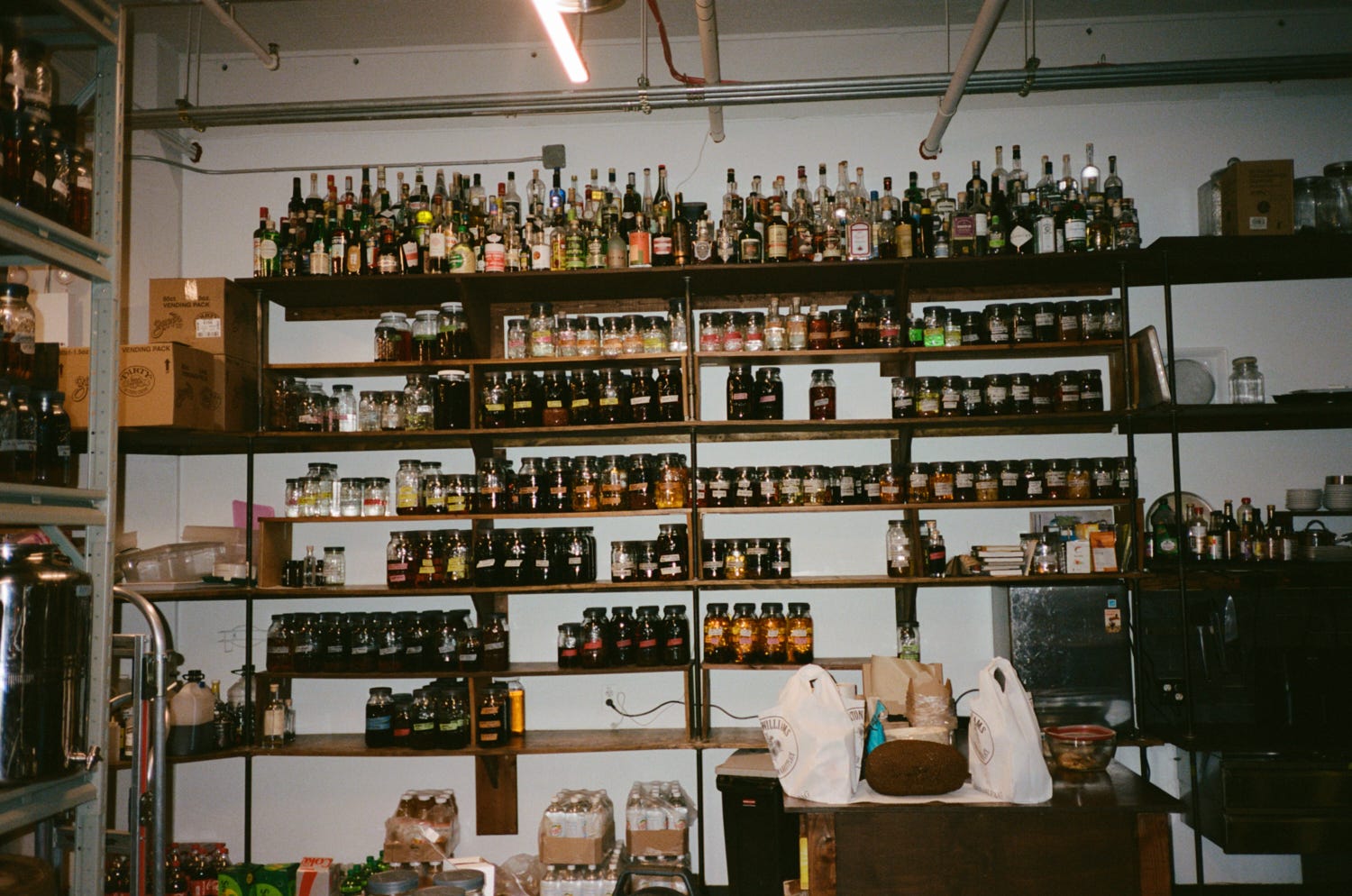
There’s long been a world of green herbal spirits, mostly produced in Europe, ranging from the Basque Country’s Izarra Green to the saffron-forward La Gauloise from west-central France. At the Forthave Spirits distillery inside the old Pfizer Building in Bed-Stuy, co-founders Aaron Fox and Daniel de la Nuez keep a small library of them, from Licor Bonet made in Catalonia (where de la Nuez’s family is from) to an eau de vie distilled from Douglas fir buds by Clear Creek Distillery in Portland, Oregon.
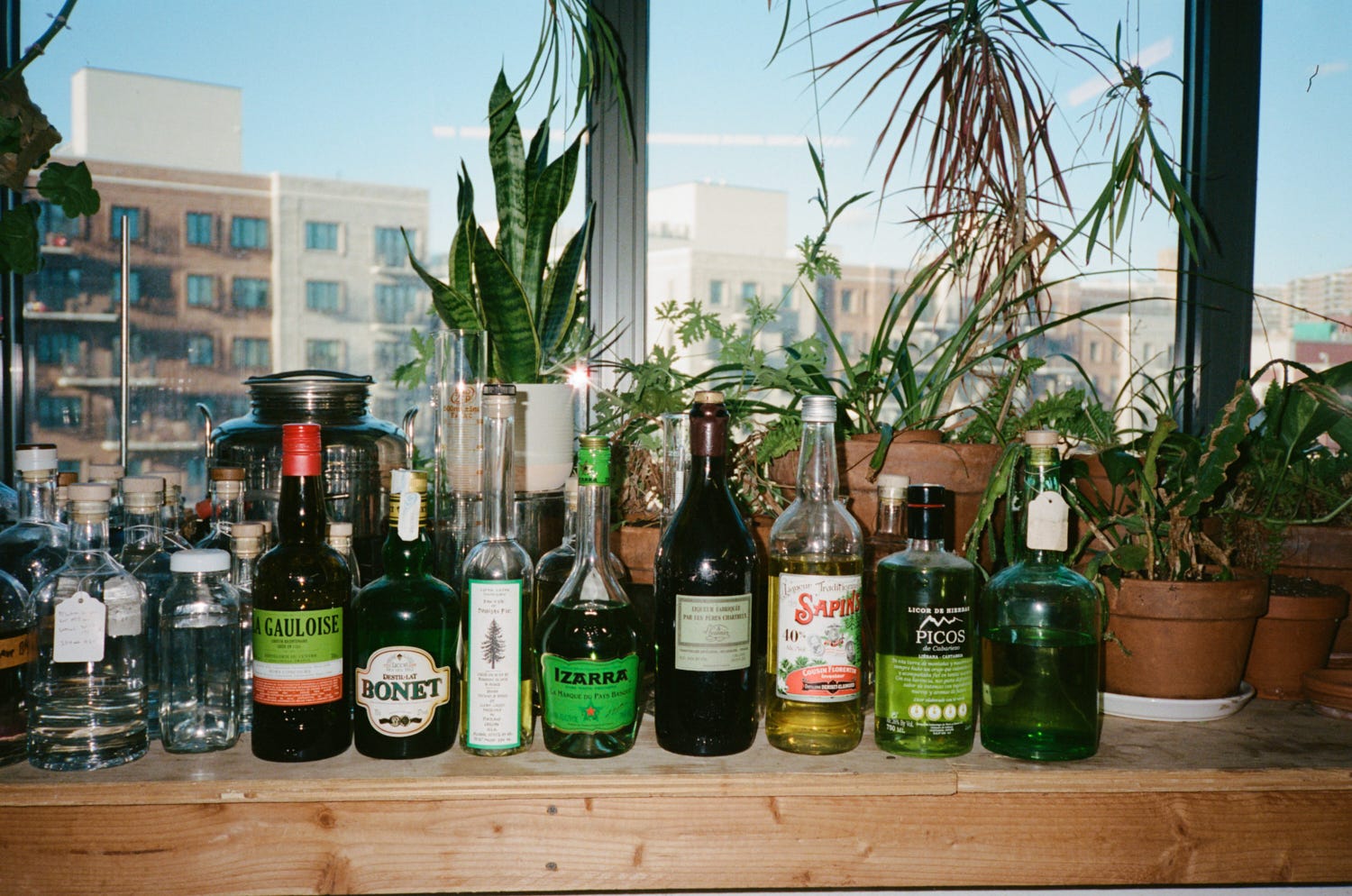
“When we make something within a category, we gather as many contemporary and historical examples as we can to paint the widest possible picture,” says Fox. “Within green herbal spirits, Chartreuse is certainly the Campari equivalent—a very important kind of Xerox—but there’s a much larger tradition.” They’re also very into vintage Chartreuse, with at least ten bottles lining the top shelf (fittingly) of their office’s spirit collection. That research helps the team clarify what they like and how to approach something of their own. “It’s not a cover song,” says de la Nuez. “It’s in the genre.”
“With all this education and all this internet, there’s big business, and there’s money to be made. But then you have the artisanal people, who are finding a love of Chartreuse and saying, ‘I can’t get this, and I have a great flavor palate, and I got $30,000, let’s see what I can do.’”
If Fox and de la Nuez are driven to make original botanical spirits in conversation with a larger tradition, the goal at Standard Wormwood Distillery is different: to produce classic spirits through an experimental lens, designed for practical use behind the bar. Their Industry City facility houses a fully operational bar where every drink is made exclusively with their own lineup—rye, gin, rum, agave, amaro, absinthe, aperitivos, and wermut—all distilled with wormwood. In attempting a Chartreuse-style spirit, co-founder Sasha Selimotic says the motivation is largely technical—to get as close as possible to the monks’ flavor profile so that any bartender could make a Last Word (gin, Green Chartreuse, maraschino liqueur, lime juice) and have it taste as it should.
That fidelity makes it useful both in their own bar and as a smart addition to their wholesale portfolio. Their green herbal elixir, which they plan to start distributing later this year, incorporates roughly 30 herbs and spices, including fresh peppermint, bay leaf, tarragon, fennel, cassia, peppercorns, and ginger—a mix of foraged and farmed ingredients grown on an upstate farm run by the family of Selimotic’s co-founder, Taras Hrabowsky.
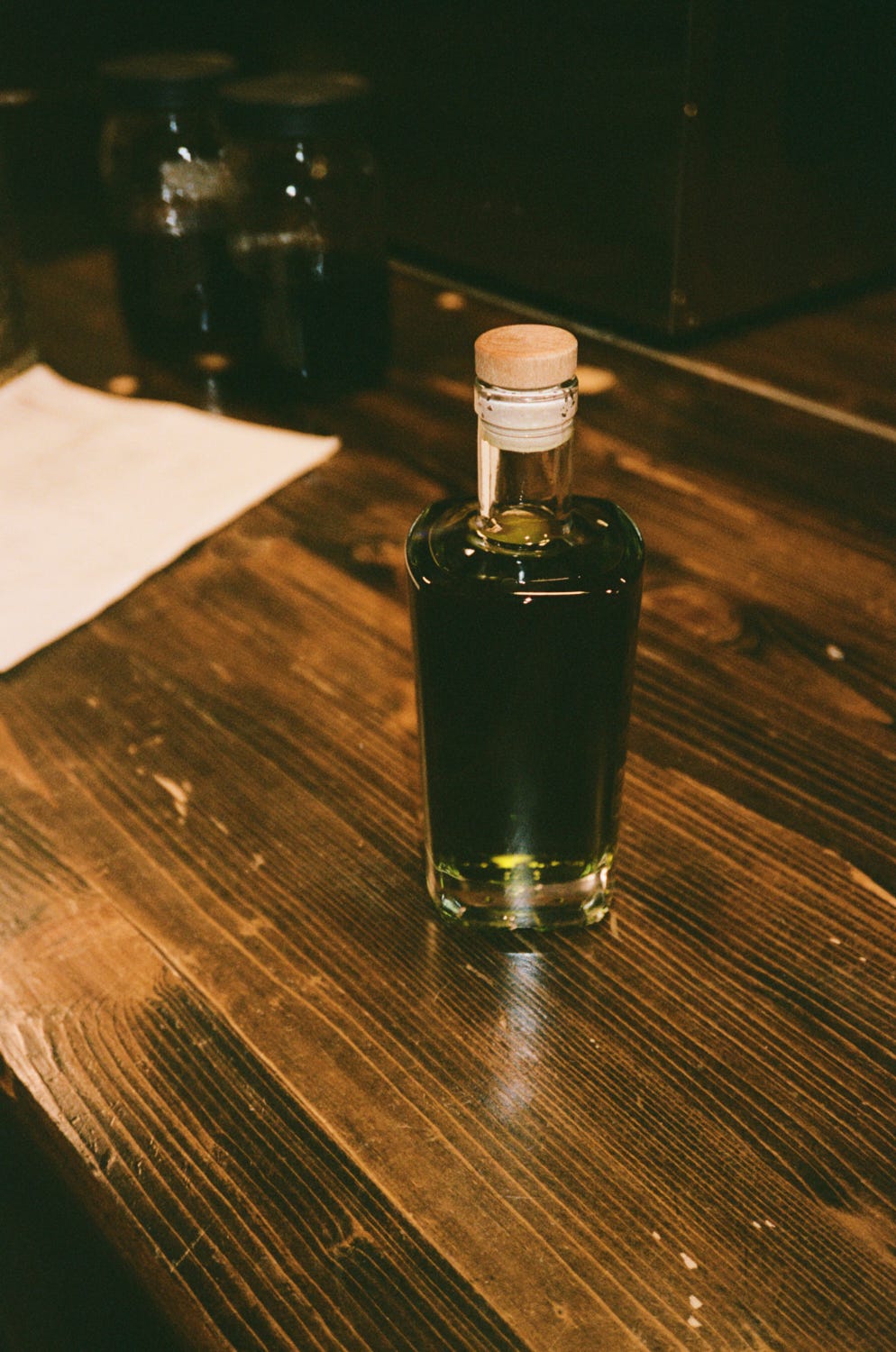
What’s notable about right now is that both Forthave Green and Standard Wormwood’s green herbal liqueur—both of which I’ve tasted—register as closer to Chartreuse than most spirits in the broader category. There’s also Green Key out of Chicago, made by Michael McAvena of The Violet Hour and The Publican, which is “remarkably similar aromatically to Green Chartreuse,” says Troy Sidle, a veteran bartender who once curated the Chartreuse collection at the now-closed Pouring Ribbons and currently heads the bar at Lucky’s Soho. (I have yet to try it.)
When I pressed him on flavor, Sidle compared Chartreuse to Coca-Cola. “Is Pepsi its own thing, or is it a Coca-Cola-like product?” The key difference, he explains, is continuity. Like Chartreuse, Coca-Cola is built on a secret recipe, its ingredients largely unknown, if hinted at. As he points out, Chartreuse doesn’t even have an exact flavor. “If you compare a 1991 yellow to a 1970s yellow, they’re so different. It’s the same formula, the same process, the same aging—all the secrets that go into production—but they’re still unique in how they’re expressed,” he says. “So if you’re trying to replicate Chartreuse, what are you actually trying to replicate?”
Although emulating Chartreuse wasn’t the primary goal of Forthave Green, Fox and de la Nuez say they wanted anyone drinking it, assuming it was a version of Chartreuse, not to be disappointed. Selimotic, at Standard Wormwood, is more blunt about their desire to approximate the touchstone, which he calls the most complex project the distillery has taken on in its decade-plus history. “It’s not about creating the exact recipe,” he says. “It’s about trying to get into the frame of the resulting flavor.”
Chartreuse has always lived on the luxury end of the spirits spectrum. Its suggested retail price is now $79.99, up from $60 in 2020, reflecting increases tied mostly to tariffs and other unavoidable costs. How shops price it is out of the brand’s hands, and scarcity routinely pushes bottles well beyond $100. (While Astor Wine & Spirits is currently sold out, you can still find non-vintage Green Chartreuse at Wine Therapy for $85.99 and Bed-Vyne for $90.) In restaurants, the cost has gone up as well. At Lucky’s SoHo, a standard two-ounce pour of Green Chartreuse runs $55. Sidle tells sticker-shocked guests he can pour one ounce for $27 instead, which is often easier to swallow.
Affordability is a priority for Standard Wormwood, which plans to price its bottles at around $30 wholesale and $44 retail. The limited nature of Forthave Green—most of it already sold through, with just 2,000 bottles made—means it isn’t cheap either, though it still undercuts Green Chartreuse (Astor Wine & Spirits sold it at $64.96). They hope to ramp up production over time, buoyed by the strong early response from both clients and customers.
For the burgeoning “Chartreuse” market, the lore of the centuries-old, spicy-sweet liqueur certainly helps. “The mythology of a spirit lends to its marketability,” Selimotic admits. And yet, no Chartreuse-inspired product will ever have the same lineage or provenance. “To get into Chartreuse is to get into history, going all the way back to the 1500s,” says Sidle. “It’s such a rich, incredible journey and story that even if a replica were to capture 50 percent of the market, Chartreuse would still be forever relevant.”
It’s likely this category will continue to expand. Whether there’s a sustained appetite for high-proof alpine spirits, however, remains to be seen. Maybe a New York flush with delicious, accessible Chartreuse-like liqueurs leads to more boozy, botanical sauces on the plate and zippy, bright-green desserts. Or maybe getting drunk comes back into fashion. Either way, as long as the monks keep making it, the revered original isn’t going anywhere. “For me, Chartreuse will always be number one,” says Morrissey. “Everything else, whether it’s made stateside or in other countries, will always be below.”
In Chartreuse-adjacent discourse, the old NoMad Hotel had a Chartreuse Room. The Sommelier from the old NoMad restaurant offered up a visit after dinner one night and it was possibly the coolest off-menu experience I have had in NYC. Not sure if current owners upheld that type of singular commitment