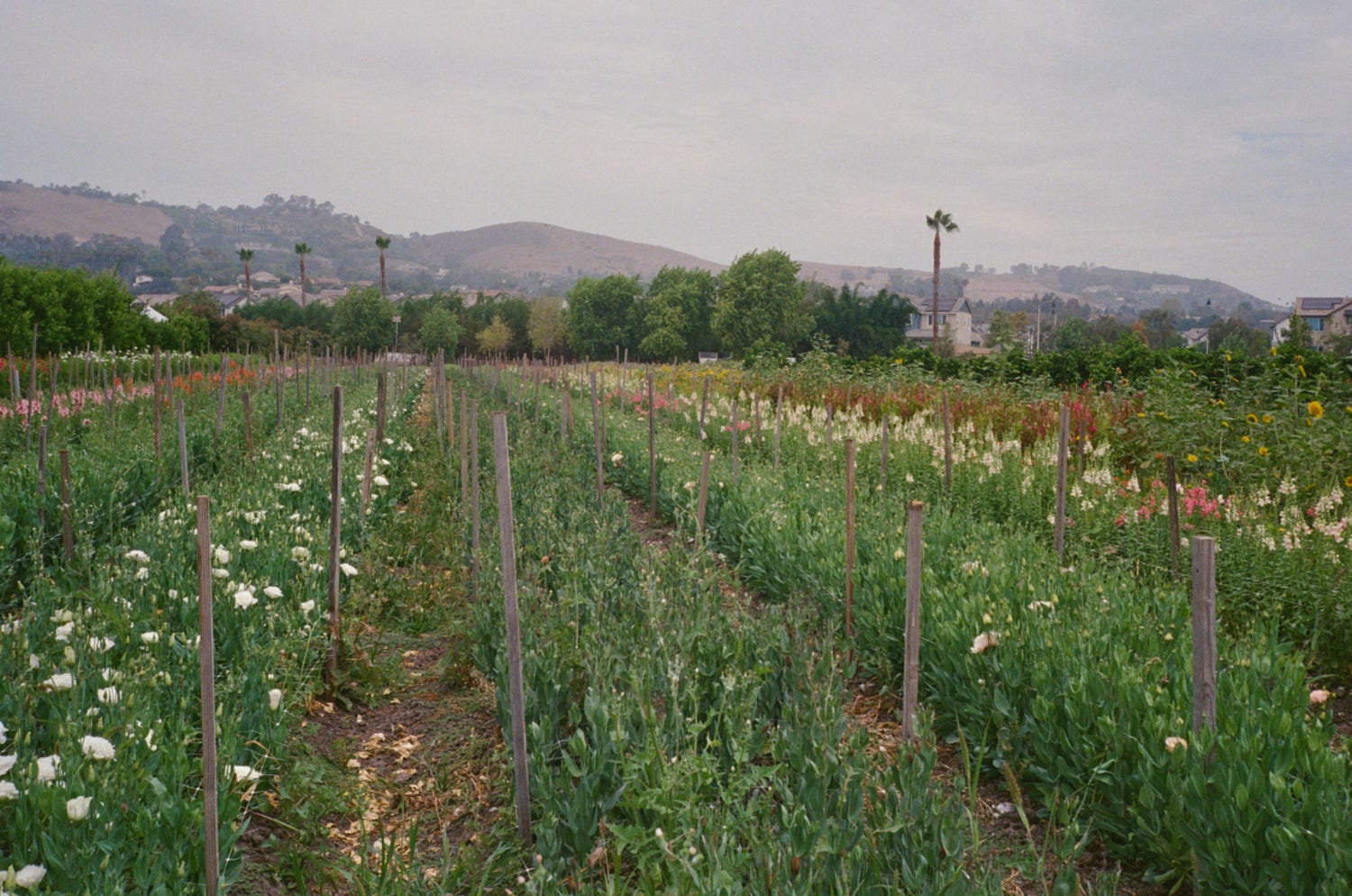

Photographs by David Gurzhiev
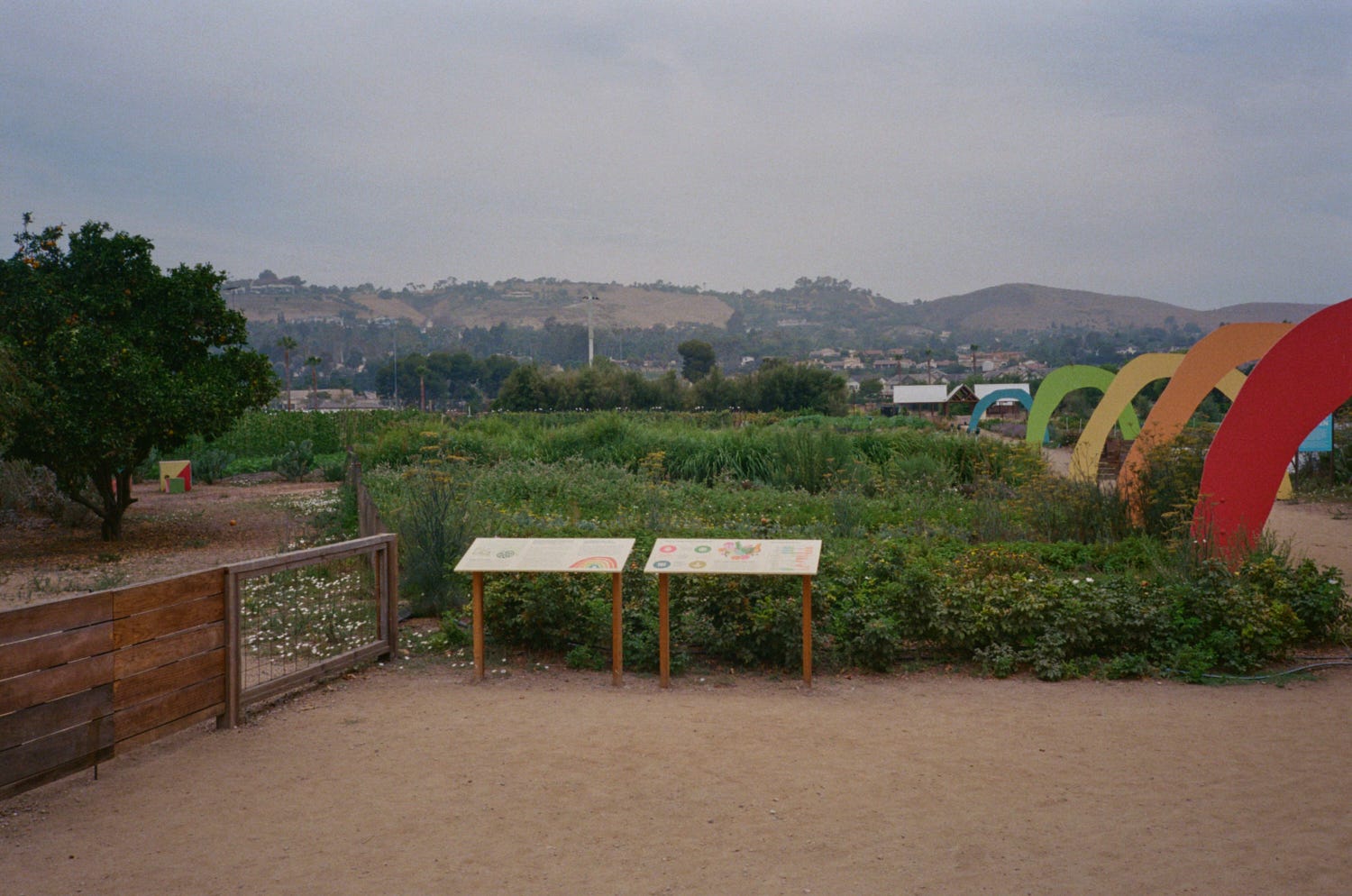
Pulling into a dirt lot in a sleepy residential neighborhood in Orange County, I made a last-minute decision to swap my sneakers for a sturdy pair of Blundstone boots. I wasn’t sure how rugged things were about to get at The Ecology Center, the 28-acre regenerative farm in San Juan Capistrano, but I wanted to be prepared.
For years, I’ve heard about this place, described by chefs and industry friends with words like “magical” and “paradise.” I took notice when Betsy chef-owner Tyler Wells camped out there for several months after his home and business (and marriage) were destroyed by the Eaton Fire; and when Erewhon started selling Ecology Center strawberries this spring. But I had not yet made the two-hour drive from L.A. until I was invited to the kickoff for the farm’s new Hearth series, upmarket farm dinners with acclaimed chefs like Oregon-based Joshua McFadden (author of the award-winning cookbook Six Seasons) and Texan live fire expert Tim Byers. And once I finally did, I learned that this independent farm run by an ambitious Deadhead is at the forefront of one of the most progressive food movements in the country.
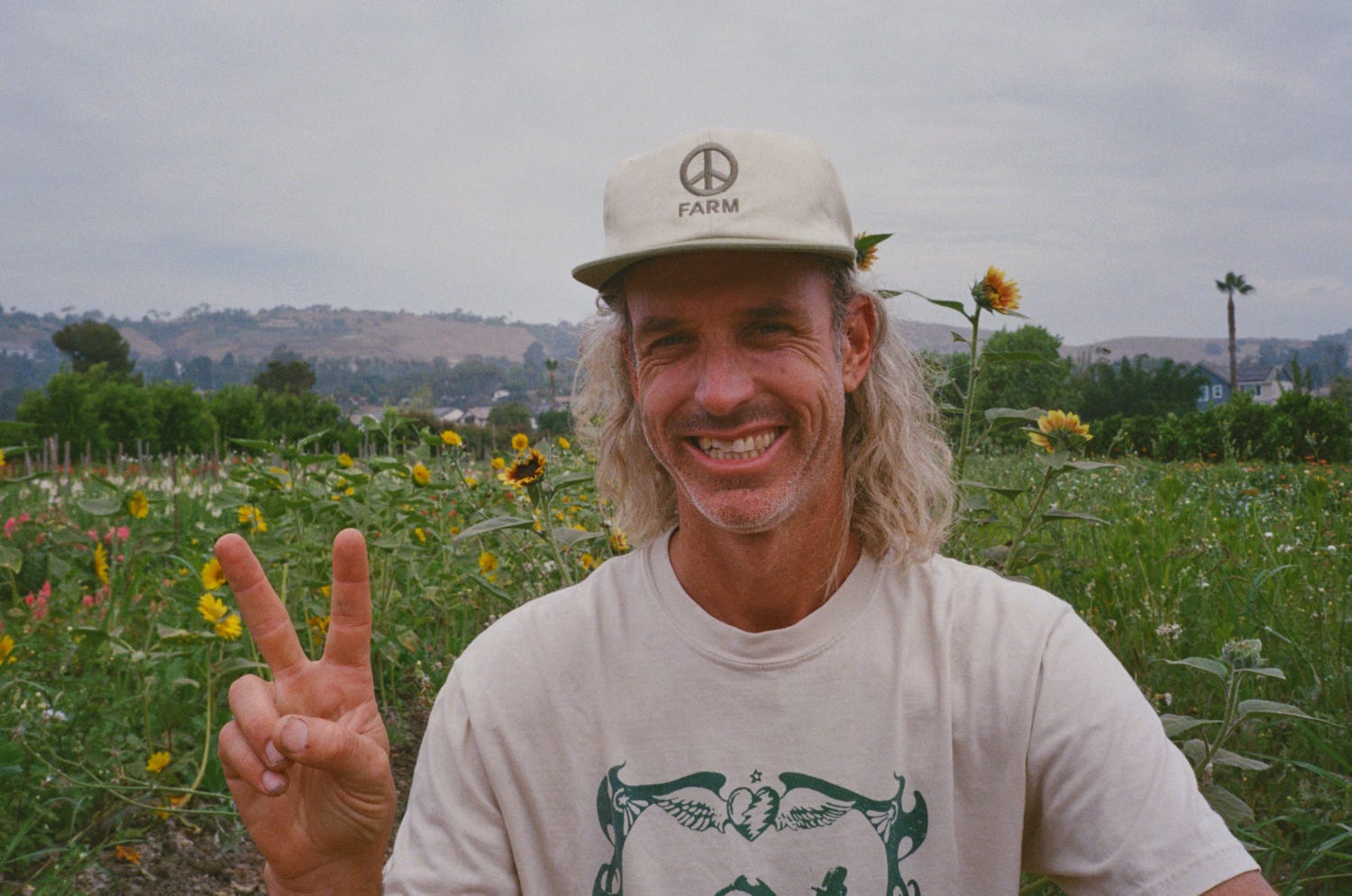
The boots, as it turned out, may have been overkill. The Ecology Center is very much a working farm, but it’s also a 28-acre nonprofit cultural and educational center, with a staff of 125 serving some 155,000 visitors a year (many of them children), so suffice it to say: they know how to make you feel comfortable. Founder Evan Marks, in a Grateful Dead lightning bolt hat, ushered in past a table laid out with various housemade ferments, pickles, and preserves, and under the literal rainbow bridge that led out to the sprawling fields. Dinner was served in the middle of said fields, beside a live fire pavilion where McFadden devised an eight-course menu tied to the farm’s four seasonal crop rotations: market garden, milpa, fruit forest, and cover crops. “It’s just such a crazy, unique, special place,” says the chef, who has been visiting and cooking at the Center for the better part of 10 years. “I love what they’re doing and what they’re trying to do and where they want to go, and I think it’s a really special offering and opportunity.”
“Our agriculture needs to be supported by community outside of just consuming.”
At 45, Marks still has the youthful air of the OC surfer boy he grew up as, with long salt and pepper hair and a crooked grin. He’s nearly always outfitted in Dead attire, and has the open manner of someone for whom early psychedelic experiences proved formative. But don’t let his happy-go-lucky hippie exterior fool you: Marks is highly credentialed, exceedingly driven, and extremely passionate in his mission to shift food, farming, and consumer culture writ large, by offering a whole slew of “ecological experiences” that provide nothing less than “creative yet achievable solutions for thriving on planet Earth.”
Those experiences, beyond the farm operations itself, range from the monthly high-end Hearth Dinners to the more affordable bimonthly Community Table meals with local chefs, to farm tours to children’s programming, to yoga classes and movie screenings in the geodesic “Peace Dome,” plus an on-site farmstand, bakery, fermentation lab, and daytime-only cafe serving salads and sandwiches made from their own produce. There is, in short, a lot going on here.
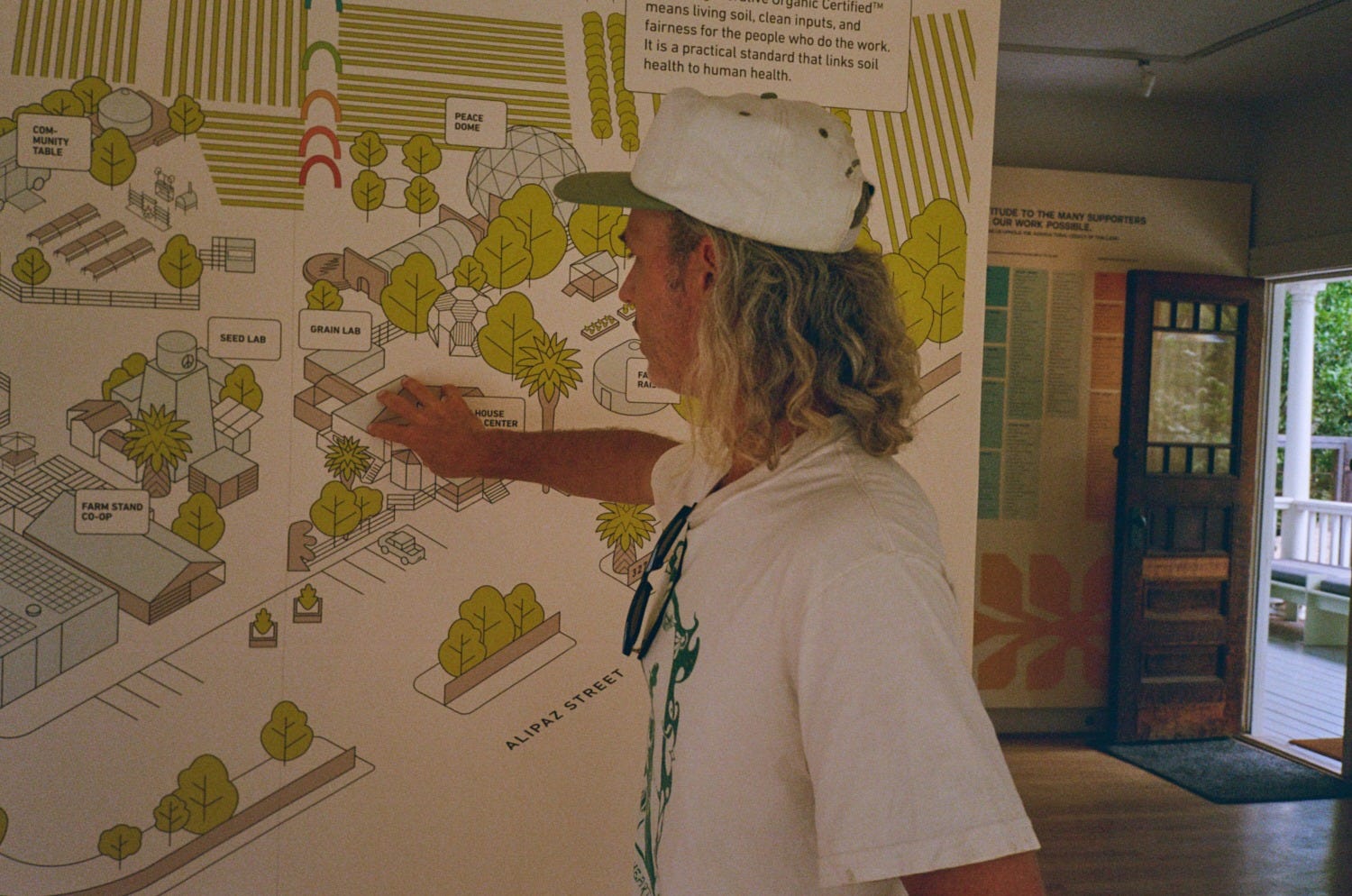
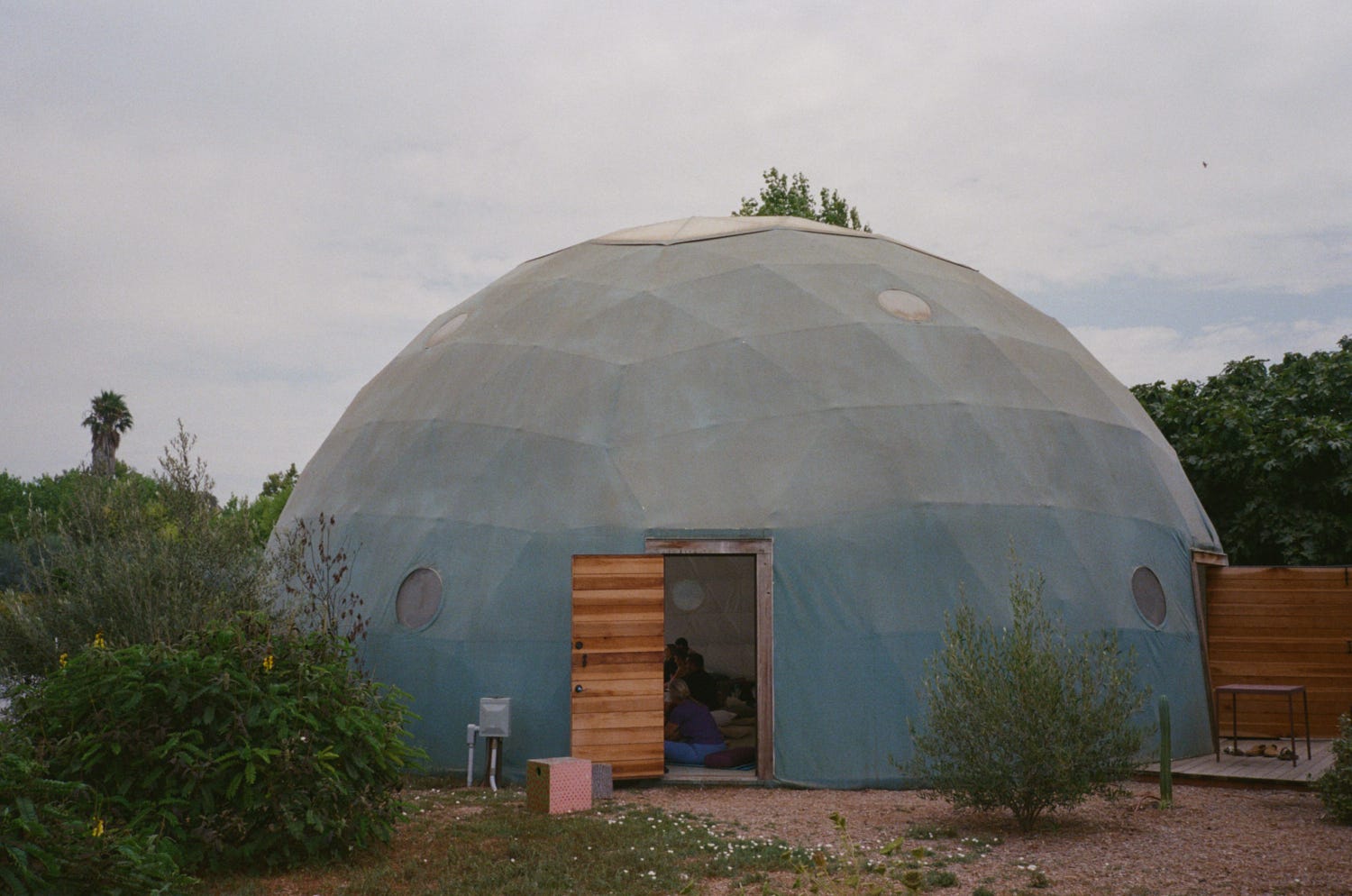
Marks grew up in Newport Beach and studied agroecology at UC Santa Cruz, a pioneering holistic approach to farming that works with natural systems, not against them. It’s rooted in traditional models for sustainable small-scale farming, with an emphasis on respecting not just the land, but also the farmers, and the local culture. Post-college, Marks spent formative time at Camp Joy, an intentional community and organic garden in the Santa Cruz Mountains, before moving overseas, developing eco-entrepreneurial projects (eco-villages, eco-hotels, and the like) in Latin America and West Africa. In 2008, to his own surprise, he felt a calling to return to OC, where he leased a one-acre dirt lot with an empty historic farmhouse from the city of San Juan Capistrano and got to work.
Today, the farm has expanded to 28 acres on the original lot, plus a two-acre market garden for culinary ingredients that operates across town. The Ecology Center grows hundreds of thousands of pounds of produce, some of which is available, beyond the farmstand and cafe mentioned above, at L.A. retailers like L.A. Grocery, McCall’s, and Erewhon; the Santa Monica and Mar Vista farmers’ markets; and restaurants like Crudo e Nudo, Felix, RVR, Gjelina, and Betsy. “Evan and I connected on a really interesting level—there was no exploration process of our friendship, it was just codified in that moment [we met],” says Wells. Before the fires, Wells would often drive the two hours from L.A. “just to do a half-hour farm walk, get my feet in the dirt, and come back up — it’s such a restorative place,” he says.
In 2021, The Ecology Center became the first farm to apply for, and receive, the official Regenerative Organic Certification. It’s a buzzword you may have seen if you’re a frequent farmers’ market shopper; but unlike “sustainable” or “natural,” which have no measurable standards, or even “organic,” which has become so co-opted by Big Ag that it holds hardly any meaning, regenerative organic has real quantifications associated with it. “At a high level, it’s about giving more than you take,” says Marks. “It’s just a new word for agroecology, which is understanding the balance between the ecology, the economy, and the equity.” What that means is not just farming for profit, but also actively maintaining the health of the soil, and the health of the farm workers, by paying them a living wage. “The triple bottom line is that we create the wholeness for the farm ecosystem, and financially, it can all circulate around itself,” he says.
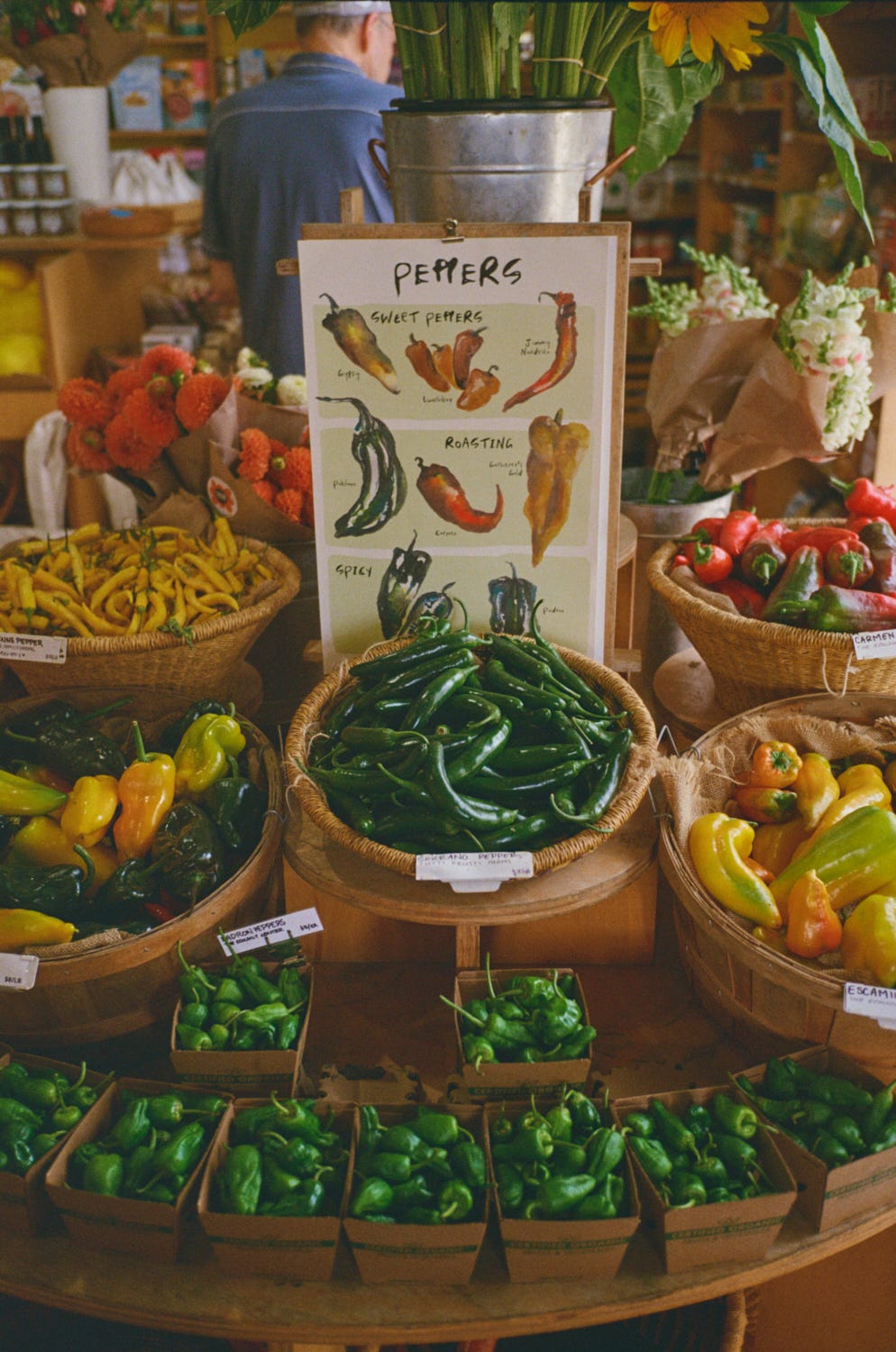
In the near future, The Ecology Center is ramping up, in both size and ambition. Marks is angling to lease another 150-300 acres, which dovetails with the farm’s efforts to increase their value-add products. They’re building a commissary kitchen (set to open early next year) and will grow out their budding tortilla business, made with heirloom San Juan blue corn grown on-site; along with a dried heirloom bean program; baked goods like sourdough bagels, crackers, breads, and granola; and pantry items like jams, pickles, and ferments, much of which will be available at farmers’ markets and retail outlets like Erewhon. (I can attest to the excellence of the granola, laced with dried figs and amaranth, and, mercifully, no desiccated coconut shards.)
They’re also continuing the Community Table series (including an upcoming dinner with Crudo e Nudo chef Brian Bornemann on October 10th and a season-ending Friendsgiving gathering in November), as well as the Hearth Dinners, and working on a new book exploring bioregional cuisine and “the taste of the land.”
For Marks, it’s all part of a larger vision, one in which a farm is about far more than simply growing vegetables. In an interview a few months after my first visit, shortly after the New York Times published a heartbreaking story about beloved Santa Clara Valley fruit farmer Andy Mariani selling his family farm, I asked Marks about why he continues this work in the face of so many challenges. He’s circumspect about Mariani (“one of the greatest stone fruit growers I’ve ever seen”), and then replies: “We have very different context and reality than many other farmers, and that comes back to the principles all laddering up together and the business model working. And maybe that’s part of the vision that we didn’t even know was going to be necessary for the future, which is that our agriculture needs to be supported by community outside of just consuming.” And with that, he’s off, to go lead a kid’s farm tour or plan a chef dinner or fundraise for his not-so-little farm that is almost singlehandedly putting the culture back in agriculture.