


There’s no shortage of steak-and-martini joints in this town, and plenty of old-school gems scattered across The Valley. I consider myself relatively well-versed in both, so I was surprised, when news that restaurateur Jonah Freedman was revamping Sherman Oaks bistro Mistral hit, that I had…no idea what Mistral was. (Nor, for what it’s worth, did Emily or a handful of other longtime L.A./industry pals.)
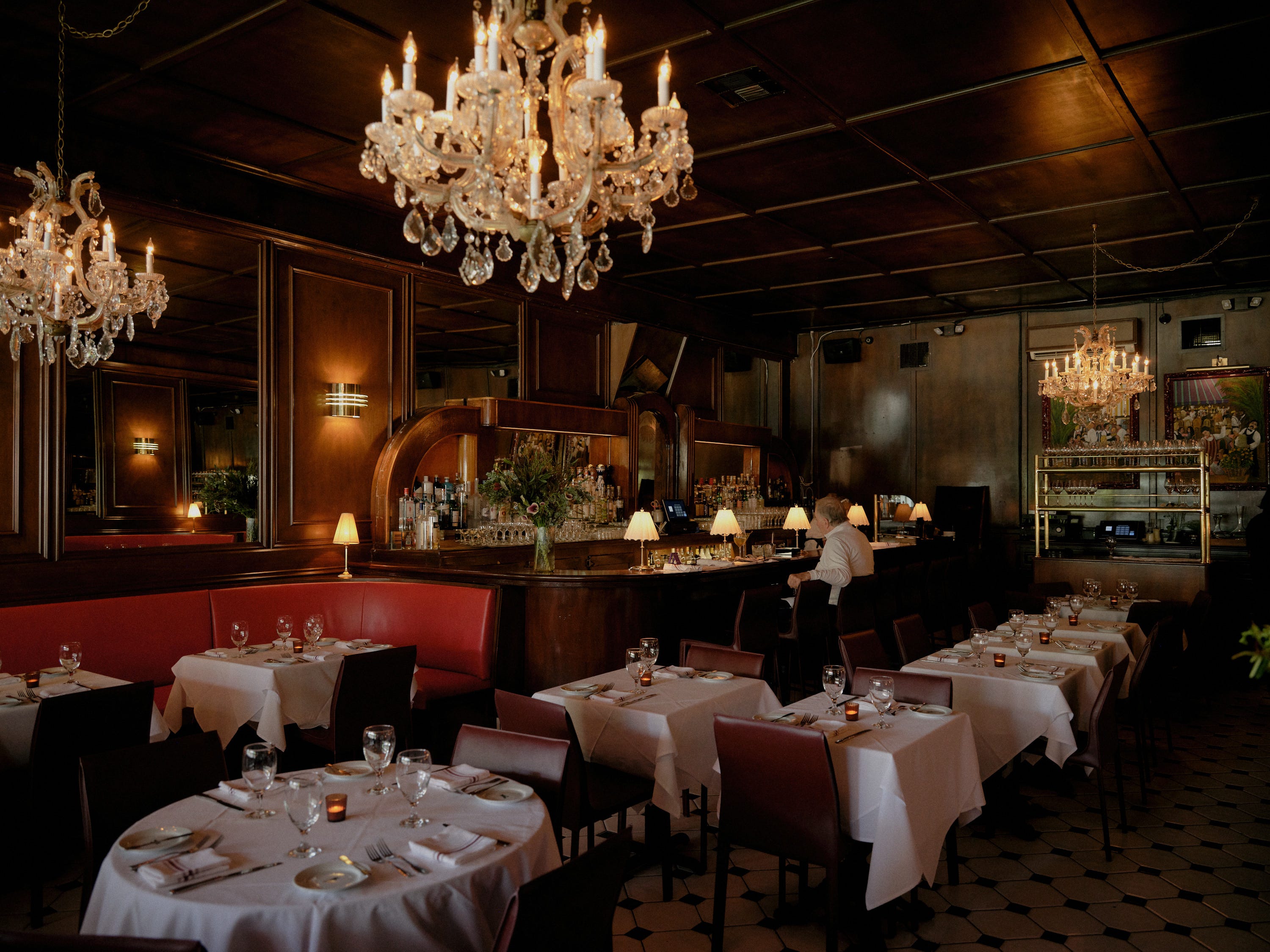
Apparently, I learned, Mistral has been a Sherman Oaks destination for nearly 40 years, with a devoted crew of regulars (many with house accounts) as attached to original owner Henri Abergel as they are to the restaurant’s signature steak frites. With its dark wooden walls, beveled mirrors, and crystal-dripping chandeliers, it’s the kind of place that Valley families and studio executives have been sidling in to for a stiff drink and a dimpled plate of escargots since time immemorial.


But unlike, say, Dan Tana’s or Musso & Frank, Mistral has flown relatively under the radar for much of its 38-year tenure. It received a positive review from Jonathan Gold in 1988, shortly after opening (and another, slightly less flattering one a year later from Michelle Huneven), which was more or less the last time Mistral received any serious press. Abergel briefly opened a second location in Beverly Hills in 2000, which lasted for about two years. And, since then, it’s pretty much been an IYKYK kind of place, beloved among Valley locals, little-known to outsiders. Ètra owner Andrew Lawson, who grew up in Studio City and now lives in Sherman Oaks (and who happens to be good friends with Abergel’s stepson), describes Mistral 1.0 as “the kind of place where people have a standing reservation. You have your table and you go every Tuesday night, you know you’ll see Henri, and that’s just what you do.”
“There are people who have dined here every single week for 30 years,” Freedman says. “What’s the point of closing this restaurant and losing all of these regulars, and all of this history?”
Now, that’s all changing. Freedman, the owner of Greekman’s [FKA Freedman’s] in Silver Lake, along with culinary director Josh Migdal (also of Greekman’s) and chef Colin Gatrell (Bavel), discreetly took the reins at Mistral last October, with Abergel’s blessing. For months, they worked quietly, “slowly learning the customer base, introducing ourselves to the neighborhood, and really getting a feel for what this restaurant is, how it functions, and what people love about it,” says Freedman. Simultaneously, they planned a light remodel and a menu refresh, which were publicly unveiled, after a brief mid-summer closure, last month. It’s a deliberately slow rollout, allowing Freedman to reassure protective longtime diners that the Mistral they know and love is only receiving some tasteful nips and tucks; while attempting to attract a new generation that, like me, has never heard of the place.
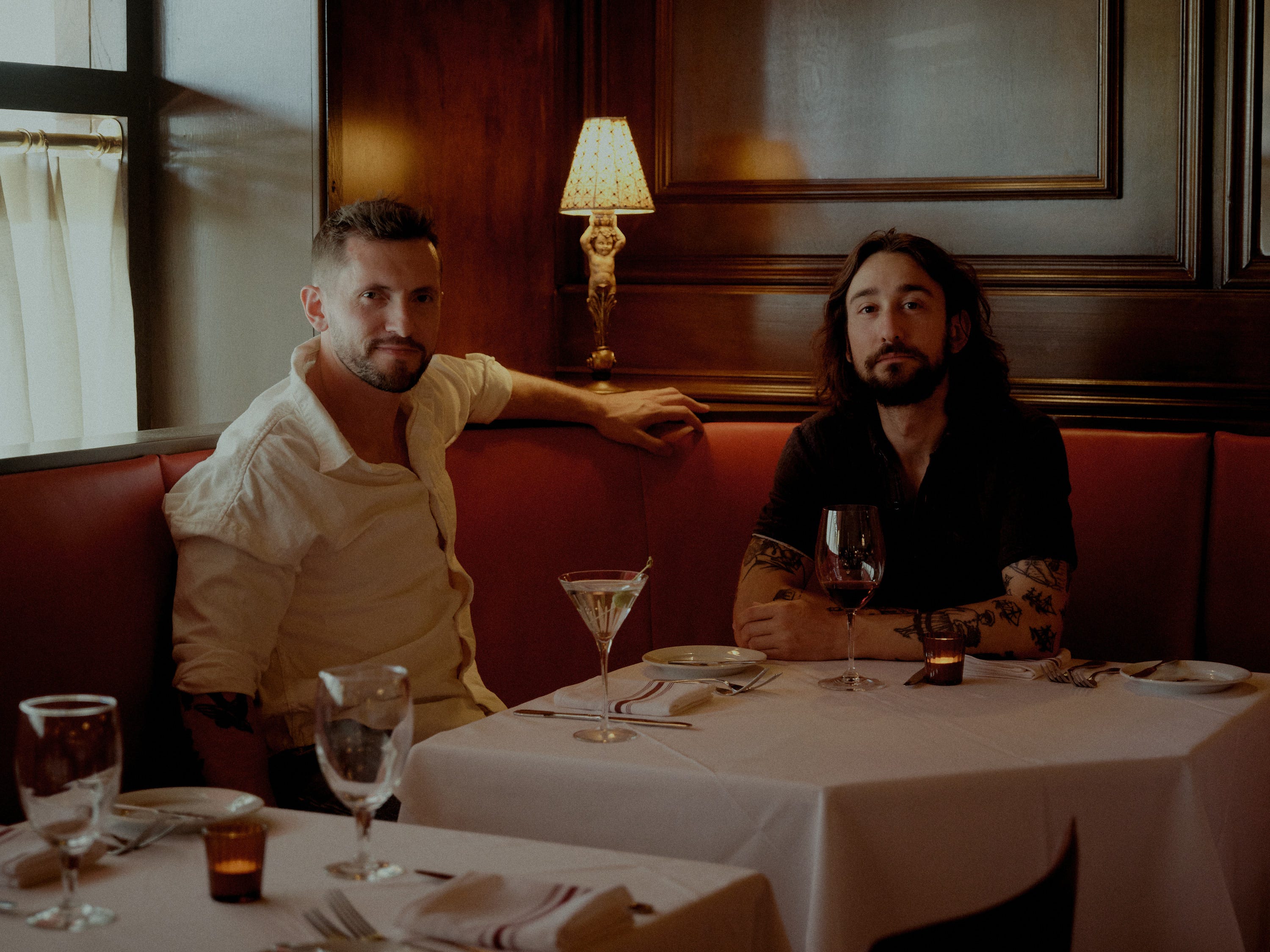
This wasn’t always the plan. Freedman wasn’t familiar with the original Mistral either, but Migdal grew up in the Valley, where his father was friendly with Abergel. Abergel had made it known that he was ready to retire, and the elder Migdal suggested Freedman and his son go check out the prime Ventura Blvd space. “When we first walked in, I immediately felt that it was an institution,” says Freedman. “This was one of those old establishment restaurants that has been there forever, doing its thing, chugging along with no PR. My first reaction was basically, holy shit, this space is unbelievable—why is this restaurant not on every ‘best place in L.A. to get a martini’ list?”
Freedman wanted the space, but not necessarily the restaurant. His initial concept, when imagining his next restaurant, skewed nouveau chophouse, a sort of “hipster Hillstone,” he says with an eye roll. Another potential buyer, he learned, had plans to demolish the entire building and start from scratch. Neither felt right. “So Josh and I started talking about it, and we agreed that we were more interested in preserving what was there,” Freedman says. Part of that desire stems from the fact that the original Mistral was by no means failing. “There are people who have dined here every single week for 30 years,” Freedman says. “What’s the point of closing this restaurant and losing all of these regulars, and all of this history?”
It’s a delicate balancing act, keeping the longtimers happy while simultaneously breathing new life into an old space. Many other restaurateurs have tried1, with varying degrees of success. To that end, Freedman and Migdal sought to make the kinds of changes that would subtly enhance the look and feel of Mistral, while still keeping it looking and feeling like, well, Mistral. (Truly, what could be more L.A. than a little light cosmetic surgery at age 38?)
They fabricated new U-shaped banquettes and installed them along the perimeter of the dining room, which look as though they’ve been there forever. They redid the molding and millwork on the walls, which blend naturally into the pre-existing wooden bar and ceiling. “People were scared when I talked to them about redoing the dining room,” says Freedman. “But now, they don’t even realize what we changed—they think it’s always looked like this, because it should look like this.” Lawson, who has dined in both versions of the room, is a fan of the subtle updates: “There’s an incredible amount of charm that [the new owners] have gracefully maintained and helped even enrich,” he says of the new space.
“They don’t even realize what we changed—they think it’s always looked like this, because it should look like this.”
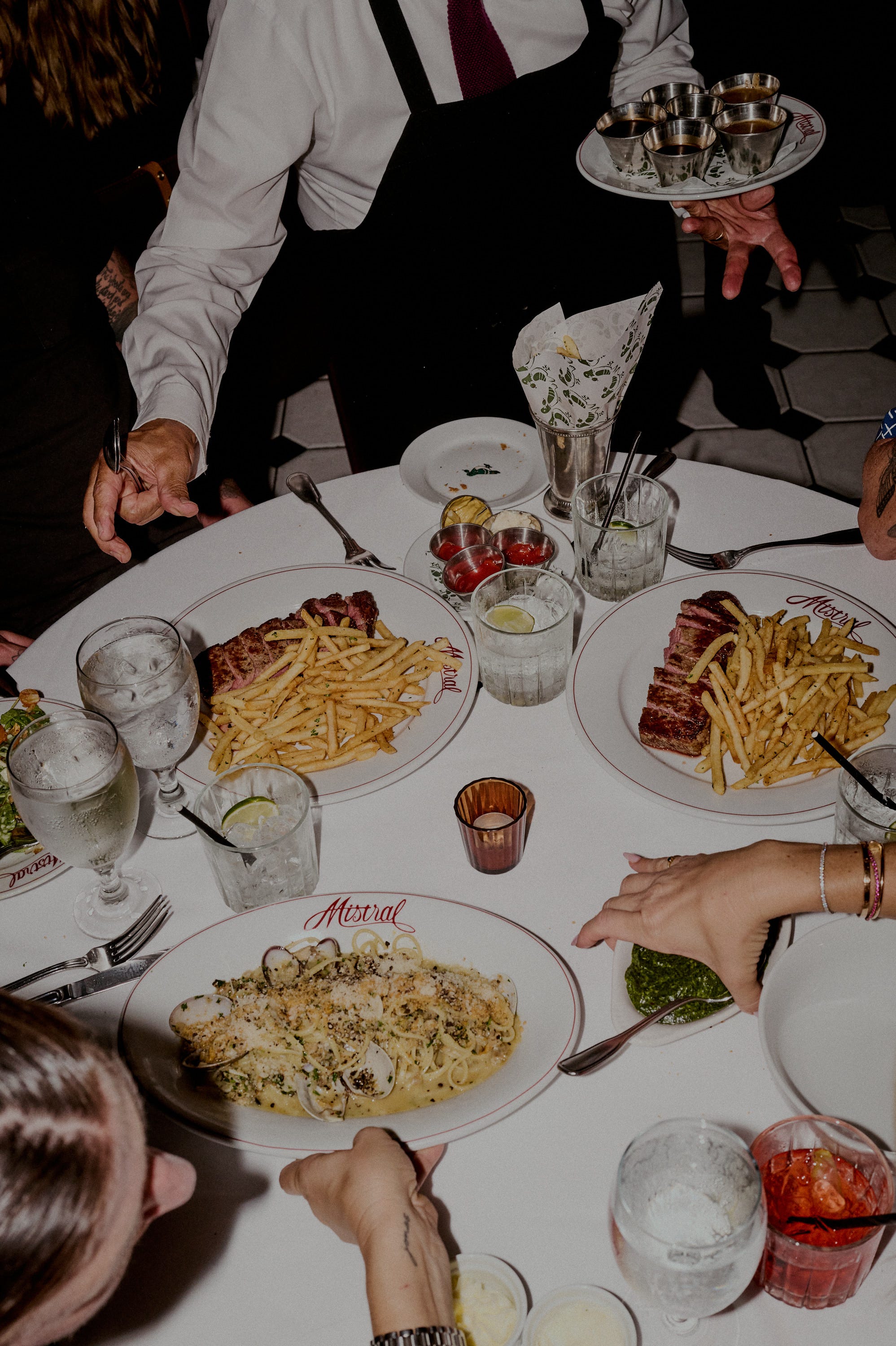
The menu has kept its original structure, and most of its existing dishes, but nearly all of the food has received a culinary glow-up, too. Beef tartare is now mixed with pops of pickled fig (delightful) and roasted hazelnuts in addition to standard-issue Parmigiano. The French onion soup arrives deconstructed, with Comte grilled cheese soldiers perched atop a crock of rich beef and onion broth. The branzino, formerly crisp-skinned and served with roasted grapes, is now seared and placed atop a Sungold tomato-and-shiso panzanella. The signature steak frites section has been expanded to include four different cuts of beef; and the martini selection has grown to include five variations, along with cocktails like a Jaguar (tequila, amaro Montenegro, and green Chartreuse) and “Mistral 75” with lemon and yuzu. (The Wine Spectator-recognized wine list, it’s worth noting, has been a particular point of pride for Mistral; it’s newly overseen by French sommelier Julia Djaoui, formerly of Bourbon Steak in Glendale).


Much of the original staff has remained, too, including 25-year veteran bartender Dana Ryan (“she’s something of a local celebrity,” says Freedman; Lawson confirms this by name-dropping her repeatedly in our conversation), and Alex Varela, dining room captain for the past 15 years. Most importantly, Abergel himself is still in the picture, if informally. “He’s really been a mentor through this whole process,” says Freedman. “He’s ushered us into and through this process from day one, and been unbelievably supportive. He’s also still our landlord, so, you know, we’re with him for life,” he laughs. Later this year, when the team transforms what is currently the private dining room next door into a new cocktail and raw bar concept, it will be called Henri’s.
All of this is a long way off from what Freedman and Migdal originally envisioned, but they’re thrilled with how it’s turned out. “In the very beginning, I was more interested in the space,” says Freedman. “I had no idea about the history, I hadn’t met Henri, I hadn’t met any of the regulars. I didn’t know the world that surrounds this place. It really is a crazy ecosystem here, and that makes me want to keep it alive and going for another 40 years.”
On the better end: La Dolce Vita in Beverly Hills; Dear John’s in Culver City; Le Veau d’Or in New York. I will not be mentioning those who haven’t pulled this off quite as well, but you can probably think of a few…
such a handsome spot! love the look