


Happy new year! I can say this still because we’re less than a week into 2026. After Thursday, no more. Before I get into today’s letter (the very first New York dispatch!), a quick correction regarding the announcement about the bicoastal evolution of The Angel. The email address to send me tips, feedback, nice emails, and the like is emily@theangel.nyc. (I won’t reprint the mistaken address, as I don’t want to confuse anyone further.)
Newsletters from here on out, when not devoted to a single bigger story, will include a mix-and-match of franchises, a few of which we’re rolling out today. Jamie’s first L.A. digest will drop next week; until then, New York is in the spotlight. For the first two weeks of January, The Angel will be free. After that, most of our reporting will be behind a paywall. Paid subscriptions are no longer paused, however, so you can sign up for the good stuff now!

Since The Angel is a bicoastal newsletter now, I’m reporting from New York with some breaking news out of Los Angeles: Horses has been closed since late December, the result of financial negligence tied to the restaurant’s current ownership (not Liz and Will). However, the team is optimistic about reopening as expeditiously as possible. According to a source within the restaurant (who asked to remain anonymous), a prospective investor has already stepped forward with serious intent to mend the situation. The potential new owner is local, has a long-standing relationship with the staff, and is committed to retaining the front- and back-of-house team from top to bottom.
It’s worth noting that ~40% of the staff has been with Horses since its opening in October 2021, a remarkable feat for a restaurant that has weathered quite the storm. After being mired in controversy in 2023, the past 18 months brought steadier business (in May, demand made opening seven days a week possible), a revived sense of good vibes, and the same excellent food and drinks that made it one of L.A.’s most compelling destinations for a night out, with the kitchen led by chef Brittany Ha. Before our move to New York, David and I were regulars at the bar, and I celebrated my 30th birthday in Kacper’s Room. There’s still nowhere else like Horses in Los Angeles, and The Angel is rooting for a swift restoration. We’ll share more updates as we have them.
It’s well-known that January is a slow month for restaurants. We’re all trying to eat healthily, drink less (or not at all), spend smarter, produce more, be better versions of ourselves. It’s also brutally cold outside. The upside for diners is that securing reservations at popular spots should, in theory, be more pain-free. But is it actually? I asked Emilie Campbell, the GM of Le Veau d’Or, if her books are easier to slide into right now. Her response: “It might be a little easier for the average person to get in, but not in a noticeable way. We benefit from scale here. It’s very different to be a restaurant looking for 100 people a night in a slow month than one that’s looking for 300. Of course, the demand drives our business as well.” Alas, maybe bank on a primetime reservation at a roomier restaurant, instead. She added, “While our seats are filled, there is definitely a difference in how people spend money. Until about the 12th, when people give up on dry January.”
If 2025 was the year of the memoir, particularly in media and restaurants, then 2026 is poised to be the year of the narrative cookbook. Last year, I read (in some cases, only partially) Keith McNally’s I Regret Almost Everything, Laurie Woolever’s Care and Feeding, Graydon Carter’s When the Going Was Good, and Drew Nieporent’s I’m Not Trying to Be Difficult (co-authored by our own Jamie Feldmar). Susan Orlean’s Joyride is in my queue. The book I loved most, though, arrived in December, right at the end. Tamar Adler’s Feast On Your Life: Kitchen Meditations for Everyday is a diary devoted to finding joy in food and the kitchen, a poetic collection of daily reflections on culinary sustenance. Adler makes the small feel big and meaningful, and reminds us why cooking is such a grounding, human practice in an increasingly inhumane world. I’ve already gifted it to several friends.
I also got my hands on an advanced copy of Will This Make You Happy: Stories & Recipes from a Year of Baking, the debut book by Cake Zine’s Tanya Bush, out in March. Its arc—confronting depression with an ambition to bake—is riveting and inspiring, and I love how intrinsic the seasonal recipes are to the story itself, anchoring the structure and shaping the rhythm of the book. Adler’s book isn’t technically a narrative cookbook, but there are a few recipes tucked into its pages, and she’s known for seamlessly weaving cooking instruction into her prose. This is the style of food book I expect to see more of in the coming year, and I’m here for it.
Here are five more predictions for the year ahead:
Reservation apps will feel increasingly irrelevant as AI forges ahead.
The British Invasion will gain real momentum in restaurants across the states, but the Irish are bringing it, too. Make room for Welsh rarebit, meat pies, Sunday roasts, and cream-pooled puddings.
Well-seasoned (not over-seasoned) restaurants, 5 to 20 years into their lifetime, will finally get the attention they deserve.
New Jersey will be the chosen destination for “outer borough” dining. Watch this space.
Crudo is out, tartare is in. Arbitrary, but I can’t bear to see another menu that begins with tuna crudo.

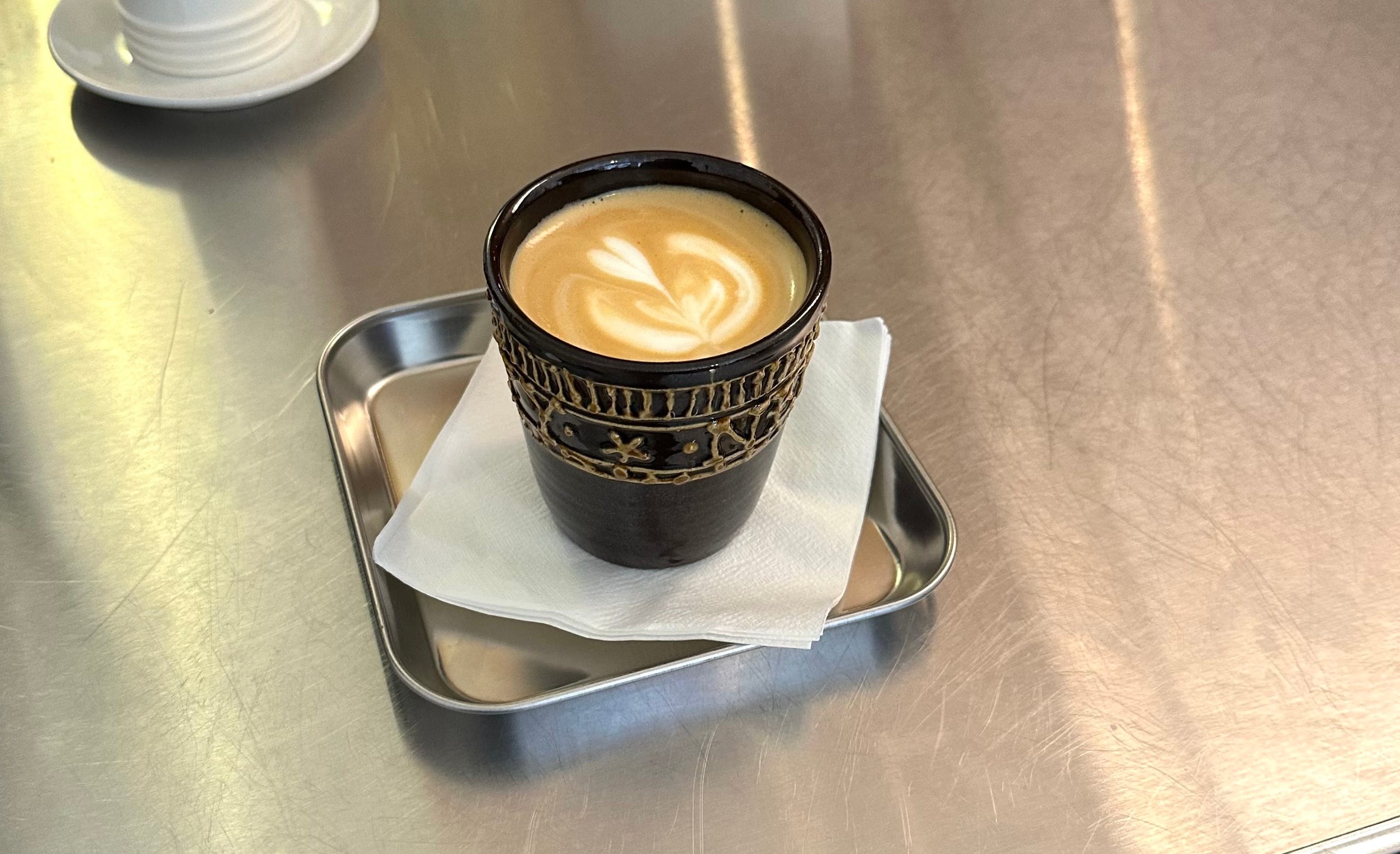
The specialty coffee scene in New York is piping hot, teeming with meaningful (not just viral) potential. My friend Reilly, who runs ops for Psychic Wines and Café Triste in L.A., once remarked that the best thing you could say about a wine is “the wine is tasting good.” I bring it up because this sentiment can and should be applied to coffee in New York right now. There’s always been good coffee here, in my lifetime at least. But a wave of recent openings, plus new shops on the horizon, signals a notable shift in the landscape, one moving decisively toward good coffee... and there’s more to it than just that.
The players:
PARK at KIMS, from Daniel Kim (ex-Maru), Andrew Kim, Sejun Park, and Sujan Ghale, opened last August on the border of Nolita and Chinatown. Influenced by Korean coffee culture, the shop serves top-tier cortados in mugs by local ceramicist Mellow, plus chiya (Nepalese chai) and pastries from C&B.
In September, L.A.’s beloved Maru arrived in Williamsburg in an airy space, quickly generating lines for its meticulously crafted espresso and matcha drinks. Pastries are from Frenchette Bakery. With three existing L.A. shops, expansion feels inevitable.
At the top of last year, Náko opened in Brooklyn Heights. I don’t know much about the owners, but I believe they’re Turkish. The minimalist café serves silky, flawlessly pulled cappuccinos, along with wine and snacks in the evening. It’s about to be my new local.
Arcane Estate Coffee, focused on single-origin specialty coffee from Panamá, opened last May in the West Village. The founder is Edgar Acosta-Masferrer, joined by partner Ian Walla, former GM of La Cabra. I haven’t visited yet, but Maxime Pradié (of nearby Zimmi’s) is a fan.
Also of note: Canyon Coffee, another L.A. import, will put down roots in Prospect Heights late winter or early spring. I’ve also heard rumblings of a new European-style coffee shop (think Bar Pisellino) landing in Brooklyn from a notable UES restaurant group.
What shops am I missing? Shout your favorites in the comments.
The take:
On a Sunday morning over the holidays, I visited my grandma, who lives by Grand Army Plaza. Afterward, I stopped for coffee at nearby Villager (which opened in 2021) in Crown Heights. Luke Fortney, a neighborhood local, had told me it was “the best coffee shop in Brooklyn.” While I was there, I ran into two other friends who live in the area.
The coffee was good, which is key. But the real value of a shop like Villager is that it provides for the neighborhood it’s in. The best coffee shops are community hubs: places to meet neighbors, grab a little treat between stretches of working from home, or spend a weekend morning with a book, where the baristas know your order and your dog’s name. They’re not built solely to provide a jolt of caffeine to commuters glued to their phones.
This is where Joonmo Kim, Maru’s founder, sees real opportunity in New York. When I asked him for his read on the city’s coffee scene, having just entered it, he said: “I feel like there’s a lot of space for speciality coffee shops to exist in neighborhoods where locals will frequent… Surprisingly, [many New Yorkers] have to travel for that higher quality coffee.” Even for a brand like Maru, which has found viral traction, Kim says 80-90% of weekday customers are locals who live or work near the Williamsburg shop. “That’s what the coffee shop business is, it has to serve the block.”
Unlike the last decade of New York coffee, which saw the decline of neighborhood cafés rooted in second-wave coffee culture and the influx of third-wave chains from cities like San Francisco (Blue Bottle), Portland, OR (Stumptown), and Chicago (Intelligentsia)—brands ultimately focused on convenience and volume, not unlike Starbucks—we’re now seeing a shift back toward the neighborhood. This time, quality is key.
That’s not to say there haven’t been exceptional, independently-owned New York coffee outfits already delivering on a high level (see Bushwick’s roastery and café Sey). But it is to say a movement is taking shape—one that prioritizes a superior standard of craft in environments engineered for people to spend time in, or at least see and be seen. In other words, there’s a light at the end of the grim Blank Street Coffee tunnel.
I also asked Elliott Foos, a veteran of the New York coffee scene (Sey Coffee, Gem, Daymoves), for his take on the current wave. In his view, the “fourth wave” peaked a few years back, defined by hospitality, a lane he played in during his time at Gem and Daymoves. As he put it, it was about “making coffee feel like more of a thing to go do, to sit and enjoy, rather than just go get.” Today, he believes we’re looping back toward a blend of the second and third waves, borrowing the idea of coffee shops as third places from the former, and a craft-driven approach to coffee from the latter—which aligns with my hypothesis. “I think if there’s a fifth wave, it’s very, very personal cafés,” he added.
One last point here. In my opinion, a ripe opportunity awaits emerging New York coffee entrepreneurs: building an original pastry program. I’m not suggesting hiring in-house pastry talent, although that would obviously be a strong move. But I do think there’s a real window to shine by collaborating with New York’s singular lineup of baker phenoms, instead of defaulting to established wholesale options like Bien Cuit or Balthazar.
Canyon Coffee has been smart about this. They were the first to sling Sasha Piligian’s pastries in L.A., and you can expect them to bring that same ethos to Prospect Heights. They have to, after all, as they’re coming into a neighborhood that already has Radio Bakery and Little Egg (where Bush is the pastry chef).

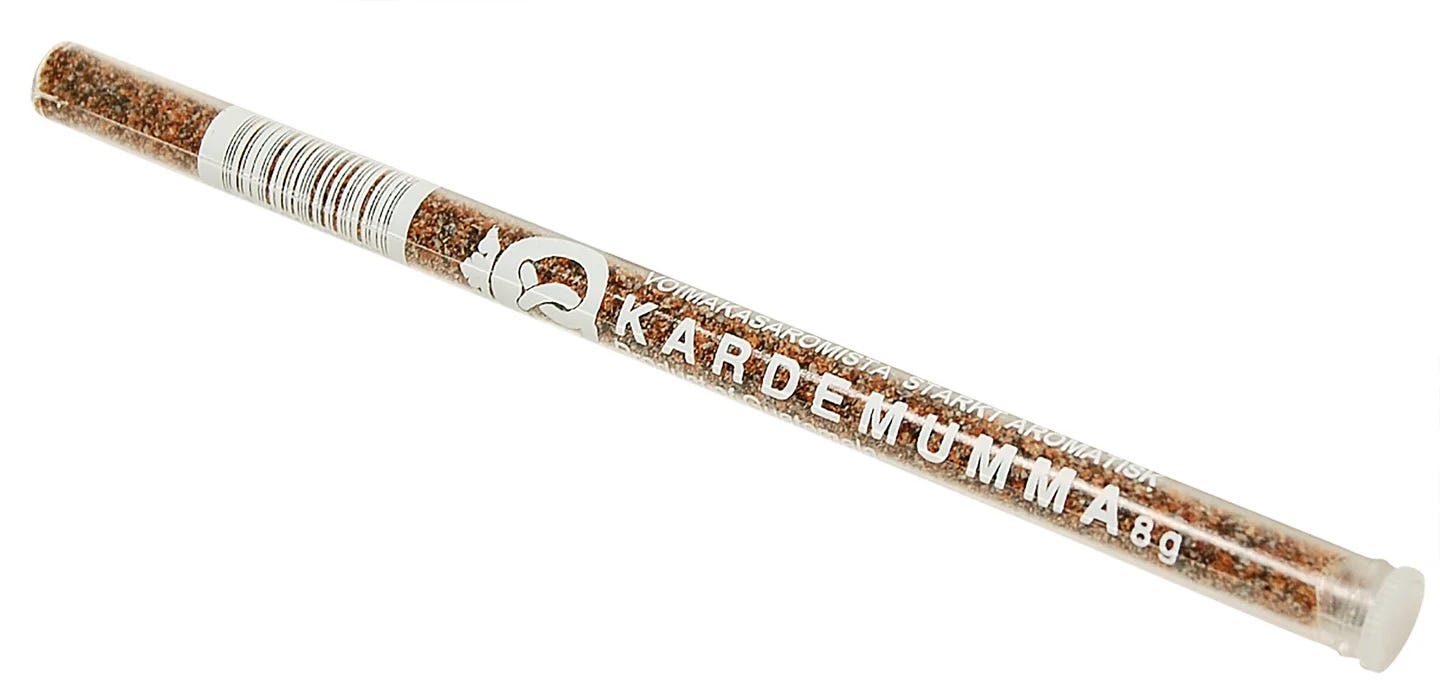
I recently picked up a tube of the Finnish brand Salliselta’s Kardemumma, or crushed cardamom, at the Finnish-owned Cafe Mutsi in Andes, NY. I’ve since become obsessed with sprinkling a bit into my morning coffee. I can’t advise ordering the specific brand from Finland on shipping cost alone, but I do recommend buying green cardamom seeds from Kalustyan’s or Duals Natural and crushing them in a mortar and pestle yourself.

I was in Paris and London in November and have updated The Angel’s Paris and London guides accordingly. Later this month, I’ll be back in L.A., after which I’ll share a definitive guide to my former home city to complement Jamie’s reporting and replace my triannual lists.
Welcome back! Love the format.
So happy to see Brittany's name in print. More publications should personally shout her out for running the kitchen at Horses! She's been killing it since day 1.